
Window Installation & Replacement

New Windows, Warm Winters, Lower Bills — Installed Right The First Time

Professional window installation and replacement for Toronto homes — from a single foggy pane to a whole-house upgrade. Casement, double-hung, slider, picture, bay, and code-compliant basement egress windows, fitted to the exact opening and sealed for the city's freeze-thaw winters.

Fixed-price quoteThe number you approve is the number you pay.
ENERGY STAR®Certified units to spec & Ontario Building Code.
Removal includedOld windows out, interior & exterior finished.
Written warrantyWorkmanship coverage, delivered on completion.
Window installation tools and hands preparing an opening Windows & doors — the only trade we practice
01 — About

About Window Installation Toronto

Window Installation Toronto is a dedicated window replacement and installation service working across the City of Toronto and the surrounding Greater Toronto Area. Windows and exterior doors are the whole of what we do — not a sideline to a general-renovation business. That focus is deliberate. A window that looks identical on a showroom floor performs completely differently once it is set into a century-old brick opening in Leslieville versus a 1970s frame-and-siding wall in North York. Getting that fit right, every time, is a trade in itself.

Our work is built on years of hands-on experience across Toronto's remarkably varied housing stock: downtown Victorians and Edwardians with irregular, out-of-square openings; postwar bungalows and side-splits through Scarborough and Etobicoke; mid-century apartments and low-rise condos; and newer infill and townhome builds across the inner suburbs. Each of those wall assemblies behaves differently in a Toronto winter, and each demands a slightly different approach to flashing, insulation, and air sealing. We measure for the opening in front of us, not for a catalogue average.

Why specialization matters

Most callbacks in this trade do not come from the window unit itself — they come from installation. Air leaking around a perfectly good frame, condensation forming because the interior seal was never completed, water finding its way behind the brick because the exterior was caulked instead of properly flashed. Because window installation is the only thing we do, our process is the same disciplined sequence on every job: remove cleanly, prepare the opening, set level and square, insulate the full cavity, air-seal the interior, flash and finish the exterior, and verify smooth operation before we leave. Specialization is not a marketing line here — it is the reason the work holds up.

A note on how we describe ourselves Everything on this page describes what we do on every project and the public rules we work to. Where you would normally expect a company to quote a founding year, a project count, or a star rating, we have left those out on purpose — we would rather you judge us by the process we commit to in writing than by numbers you cannot verify before we start.
02 — Why Choose Us

Six Reasons, Rooted In Process

Not claims you would have to take on faith — reasons grounded in how the work is actually done.

01

Windows & doors are all we do

We are not a general contractor fitting windows between drywall jobs. Every installer on a project spends their working days setting, sealing, and finishing fenestration. That repetition is where consistent quality comes from.

02

A written, fixed-price quote before any work begins

After an on-site assessment, you receive a written quote that spells out the units, the installation method, what is removed and disposed of, and the finishing included. The price you approve is the price you pay. If we open a wall and find rot or a structural surprise, we stop and show you before anything changes — no line item appears on your invoice that you did not see and approve first.

03

Climate-appropriate installation for Toronto winters

Toronto sits in a cold, freeze-thaw climate where windows are responsible for a large share of a home's heat loss. We install ENERGY STAR® certified units and seal them for the way Toronto weather actually behaves: continuous air sealing on the interior, full-cavity insulation, and proper exterior flashing so wind-driven rain and melting snow are directed away from the wall rather than trapped inside it.

04

Documented quality steps

Level, plumb, and square are checked and recorded before fastening. The insulation cavity is filled, not just stuffed at the edges. Interior and exterior seals are completed the same day. Operation — cranks, locks, sashes, weatherstripping — is tested in front of you at close-out.

05

Permits & code handled where required

A straight like-for-like replacement in the same opening does not require a City of Toronto building permit. Enlarging an opening, cutting a new opening, or installing a basement egress window does. We tell you honestly which category your project falls into, and where a permit is required we handle the application and inspection coordination end-to-end.

06

Fixed price plus written warranty

You receive a written workmanship warranty on completion, alongside the manufacturer's coverage on the glass seal and hardware. All project documentation is available on request — which also makes claiming the provincial ENERGY STAR® rebate straightforward.

03 — Services

Window Installation & Replacement

Eight core services covering the styles and situations Toronto homeowners ask about most. Ranges are indicative, based on published 2026 Toronto-market pricing — your price is always the written quote after we see the opening.

Casement window in a bright interiorTightest seal

Casement Windows

Casement windows are hinged on one side and crank outward, so the entire sash swings clear of the opening. That makes them the tightest-sealing common style — the sash compresses against the frame's weatherstripping as it closes — and the most energy-efficient choice for Toronto's winters. Because the whole opening clears, casements are also the practical default for basement egress, where the code cares about clear opening area rather than glass size.

$800 – $1,600Per window · installed

Double-hung window with natural lightTraditional

Double- & Single-Hung

Double-hung windows have two sashes that slide vertically, both of which can open; single-hung units open only at the bottom. They suit traditional Toronto homes and heritage-sympathetic streetscapes, tilt in for easy cleaning, and are among the most popular residential styles in the city. Because only part of the window opens at once, hung windows are a poor choice for egress but an excellent one for general living spaces.

$500 – $1,500Per window · installed
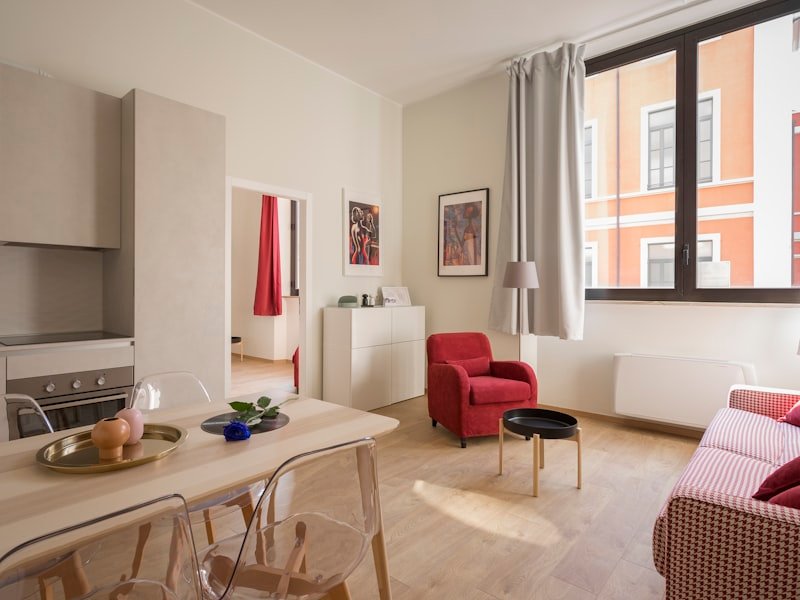
Sliding window in an apartment interiorSimple & durable

Sliding Windows

Slider windows glide horizontally on a track and are mechanically simple, durable, and cost-effective — a common sight in mid-century Toronto bungalows and above kitchen counters where a crank would be awkward. Because only one sash slides, a slider provides roughly half its glass area as clear opening, which is why it is rarely the right unit for a basement bedroom.

$700 – $1,400Per window · installed
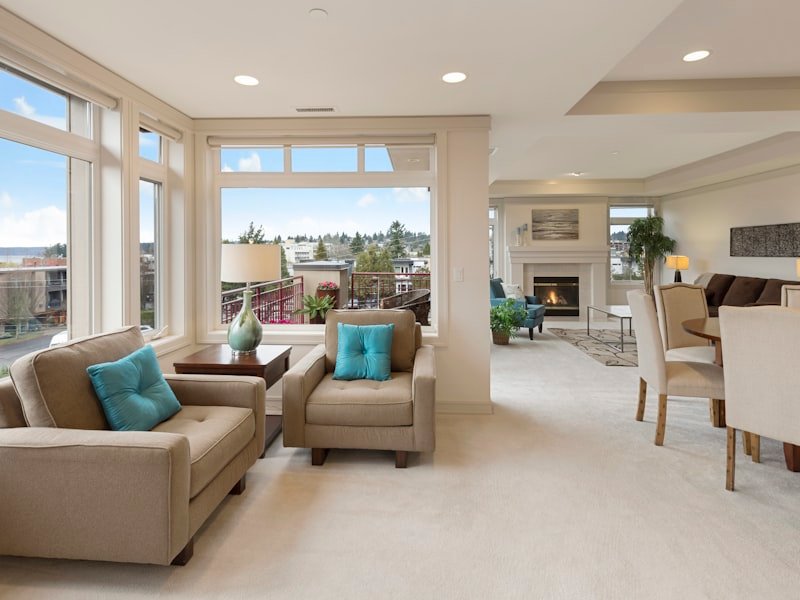
Large picture windows in a living roomMax glass & view

Picture & Fixed

Picture windows do not open. With no operating hardware and no moving seal to fail, they deliver the largest possible glass area, the clearest view, and excellent energy performance for the money — ideal for living rooms and stairwells where light and view matter more than ventilation. They are frequently combined with operable casements on either side, and the price rises sharply for oversized or architectural glass.

$300 – $900Per window · installed
Awning window above a kitchen counterRain-friendly

Awning Windows

Awning windows are hinged at the top and open outward from the bottom, so they can stay open during light rain — a genuinely useful trait in Toronto's wet spring and fall. They pair well above or below fixed windows and work in bathrooms and basements where privacy and ventilation both matter. Note that most Toronto building officials will not accept an awning window for egress, because the open sash blocks escape.

$600 – $1,300Per window · installed
Bay window projecting from a living room wallArchitectural

Bay & Bow Windows

Bay and bow windows project outward from the wall to create a wider sightline and, often, an interior sill or seat. They are architectural features rather than simple swaps: the installation typically involves structural support, exterior finishing, and additional framing, so they sit well above standard window pricing. Popular on Toronto's older brick homes and in living-room feature walls.

$2,200 – $4,700Per unit · installed
Basement bedroom window admitting daylightCode-compliant

Basement Egress

Turning a basement space into a legal bedroom, in-law suite, or rental unit in Ontario means installing a code-compliant egress window — an emergency exit sized to the Ontario Building Code. This is specialized work: cutting a larger opening through a poured-concrete or block foundation, installing the correct unit (almost always a casement, because it clears the full opening), and building a compliant window well with drainage where the sill sits below grade. This work requires a building permit, which we handle.

$3,000 – $8,000Per window · incl. well
Modern home exterior with new windowsBest value

Whole-Home Replacement

Replacing every window in one project is the most cost-effective way to upgrade — a single mobilization, bulk pricing on units, and one coordinated finish rather than the compounding cost of doing a few windows a year. For a typical Toronto detached home, a full replacement commonly lands in three brackets depending on tier, and the ranges move with window count, sizes, and access.

$8,000 – $20,000+Per home · by tier
04 — Indicative Pricing

What It Costs

Every figure is benchmarked to published 2026 Toronto and GTA-market pricing for the service described. It reflects the market, not a specific offer from us — read the disclosure below before you budget.

Featured · whole-home replacement

Whole-Home, By Tier

For a typical Toronto detached home, a full replacement commonly lands in three brackets depending on tier. Doing every window in one project is the most cost-effective route — one mobilization, bulk unit pricing, one coordinated finish.

Basic vinylDouble-pane, retrofit$8k – $12k
Mid-rangeEnergy-focused upgrade$12k – $18k
PremiumTriple-pane / full-frame$20k +
CasementPer installed unit$800 – $1,600
Double- / Single-HungPer installed unit$500 – $1,500
SlidingPer installed unit$700 – $1,400
Picture / FixedPer installed unit$300 – $900
AwningPer installed unit$600 – $1,300
Bay / BowPer installed feature$2,200 – $4,700
Basement EgressIncl. cutting + well$3,000 – $8,000
Glass-Unit ReplacementSound frames onlyBy assessment

What moves your price

Several real factors decide where a project lands inside — or outside — these ranges: the number and size of openings; window style and glazing (double- versus triple-pane, Low-E coatings, argon fill); frame material (vinyl, fibreglass, or aluminum); installation method (retrofit insert versus full-frame replacement); access and floor level; wall type (brick and stone are more involved than siding); and the condition of the opening once the old unit is out. Your price is the written quote we provide after an on-site assessment — not a figure from this table.

Pricing disclosure

Indicative ranges are provided to help you budget and are not an offer to contract. Unless your written quote states otherwise, ranges exclude: building permits (charged at cost where required); any engineering or structural work (at cost); applicable HST; and unforeseen conditions discovered once an opening is exposed, such as rotted framing, previous water damage, or non-standard structural support. Provincial rebate amounts are set by the program administrator and are not a discount from us. A firm, all-in price for your specific home is established only in your written quote.

05 — Problems We Solve

Common Window Problems

Six situations Toronto homeowners bring us, each tied to a real local condition — the climate, the housing stock, or the building code.

Signal 01

Condensation & failed seals

Moisture or a permanent haze trapped between the panes means the insulating glass has lost its seal and its argon fill — the pane is no longer insulating. Toronto's swings from about minus twenty in a January cold snap to well above thirty in summer work the seals hard. We can replace the glass unit alone or the whole window.

Signal 02

Cold drafts & rising bills

Windows account for a large share of heat loss in a typical home, and in Toronto's heating-dominated climate that shows up directly on your gas or hydro bill. Old single-pane or early double-pane units with tired weatherstripping leak conditioned air constantly. Replacing them with ENERGY STAR® certified units — and, just as importantly, air-sealing the installation properly — is one of the most effective comfort upgrades available to a Toronto home.

Signal 03

An illegal basement bedroom

Basement conversions are one of Toronto's most common projects, but a below-grade bedroom is not legal — and may not be insurable — without a code-compliant egress window. If a fire blocks the basement stairs, that window is the second way out. We size and install egress to the Ontario Building Code and coordinate the permit.

Signal 04

Windows that stick, won't lock, or won't stay open

Sashes that jam, cranks that spin, and locks that no longer catch are usually signs of a warped frame, failed balances, or hardware at the end of its life. Beyond the daily annoyance, a window that won't close and lock properly is a security and air-sealing problem. We assess whether hardware repair or full replacement is the sounder investment.

Signal 05

Rot & water damage

Peeling paint, soft wood, and interior staining around a window point to water getting past a failed seal or improper flashing — a real risk in Toronto's wet spring thaw and heavy summer storms. Left alone, the damage spreads into the wall structure. We remove the unit, address the moisture source, and reinstall with proper flashing.

Signal 06

Heritage & character homes

Toronto has numerous designated Heritage Conservation Districts — Cabbagetown among them — where window changes are governed by the Ontario Heritage Act on top of the building code. Replacements generally must match original material, appearance, and profile, and a heritage permit is often required. We work within those constraints.

06 — Homeowner Checklist

Protect Yourself Before You Sign

The quality gap between installers is real. Here's the standard we hold ourselves to — and the questions worth asking any contractor.

The standard we work to

On every job

  • A written, fixed-price quote after an on-site measure — not a phone estimate sight-unseen.
  • ENERGY STAR® certified units installed to manufacturer specification and Ontario Building Code.
  • Full-cavity insulation and continuous interior air sealing on every opening — not edge caulk alone.
  • Proper exterior flashing that directs water away from the wall, not surface caulk over a gap.
  • Removal and disposal of old units, plus interior and exterior finishing, included and stated in writing.
  • A written workmanship warranty on completion, plus manufacturer coverage — with certification numbers you can use for the provincial rebate.
Questions to ask any contractor

Before you sign

  • Is your quote a fixed price, and does it list removal, disposal, insulation, flashing, and interior/exterior finishing?
  • Are the units ENERGY STAR® certified, and will you give me the certification numbers for my rebate application?
  • Is this a retrofit insert or a full-frame replacement — and why is that the right method for my opening?
  • Does my project need a building permit, and if so, who handles the application and inspection?
  • What exactly does the workmanship warranty cover, for how long, and how do I make a claim?
  • What happens, and what does it cost, if you find rot or a structural issue once the old window is out?
07 — How It Works

Our Six-Step Process

A clear sequence with commitments we control at each stage — so you always know what happens next.

01

Get in touch

Call (613) 324-9141 or send your details through our contact form. Tell us roughly how many windows, which rooms, and whether a basement bedroom is involved. We respond promptly to book your assessment.

Response within one business day
02

On-site assessment

We come to your home, measure every opening precisely, check the condition of frames and surrounding walls, and discuss styles, glazing, and whether a retrofit or full-frame approach suits each opening. This is where we flag anything that would require a permit.

No cost · no obligation
03

Written fixed-price quote

You receive a written, itemized, fixed-price quote covering units, installation method, removal and disposal, finishing, and warranty. Nothing is left to be decided later on site.

Usually within two business days
04

Permits & ordering

Once you approve the quote, we order your units to the measured sizes and, where the work requires it, prepare and submit the building permit application and coordinate with the City. We confirm the timeline before you commit.

Standard units ready in a few weeks
05

Installation day

Our crew removes the old units cleanly, prepares each opening, and sets the new window level, plumb, and square. We insulate the full cavity, complete the interior air seal, flash and finish the exterior, and finish the interior trim. Where a permit applies, we book inspections at the correct stages.

Inspection stages coordinated
06

Walkthrough & warranty

We test every window with you — operation, locks, weatherstripping — and clean up completely. You receive your written workmanship warranty, the manufacturer's coverage, and the ENERGY STAR® certification numbers you need to claim the provincial rebate. Documentation stays available on request.

Rebate documentation included
08 — Service Areas

Toronto Neighbourhoods & GTA Areas

We serve homeowners across the City of Toronto and into the surrounding Greater Toronto Area — working within Ontario only. If your neighbourhood isn't named, ask.

Toronto neighbourhoods
Downtown CoreThe AnnexYorkvilleRosedaleCabbagetown RiverdaleLeslievilleThe BeachesLeasideDavisville Forest HillYonge & EglintonHigh ParkRoncesvallesThe Junction Bloor West VillageParkdaleLiberty VillageDanforth / GreektownEast York North YorkWillowdaleDon MillsScarboroughAgincourt EtobicokeThe KingswayLong BranchMimicoSwansea
Surrounding GTA communities
MississaugaBramptonVaughanMarkhamRichmond Hill ThornhillPickeringAjaxOakville
09 — Toronto Guide

The Toronto Homeowner's Window Guide

Six things worth understanding before you replace a window in Toronto — the permits, codes, rebates, and local quirks that actually affect your project, with their real current values.

Guide 01 · Permits

When you need a City permit

Under the Building Code Act, a permit is required for material alterations — but a straightforward replacement usually isn't one. The City of Toronto's own guidance is clear: replacing a window or door needs no permit provided there's no change in the location or size of the opening, the structural support (the lintel) isn't affected, and no new exit is created. Enlarge, cut a new opening, alter the header, or add egress, and you cross into permit territory.

House review ≈ 10 business days
Guide 02 · Egress

Basement egress & the OBC

Creating a bedroom below grade puts you under Section 9.9.10 of the 2024 Ontario Building Code. The clear opening — the actual unobstructed space when fully open, not the glass or frame size — must be at least 0.35 m² (about 3.77 sq ft), with no single dimension under 380 mm (about 15 inches). A casement is almost always right: the whole sash swings clear, meeting the requirement at a far smaller frame than a slider. Below-grade windows into a well need at least 550 mm of clearance in front.

Clear opening ≥ 0.35 m²
Guide 03 · Rebate

$100 per opening rebate

As of 2026, the active provincial rebate is the Home Renovation Savings Program, delivered through Save on Energy and Enbridge Gas with support from the Government of Ontario. It pays $100 back per eligible window or door rough opening, provided units are ENERGY STAR® certified. A minimum of three windows is required, and windows fall under the bundled path — paired with at least one other upgrade such as air sealing or insulation. The common cause of delay is a missing certification number — which is exactly why we provide those.

Runs to Nov 30, 2026
Guide 04 · ENERGY STAR®

What certification means now

As of the 2020 national update, Canada retired the old climate-zone labels for windows in favour of a single national standard — a window is now simply ENERGY STAR® certified or it is not, and the bar was raised. To qualify, a window must reach an Energy Rating (ER) of at least 34, or a maximum U-factor of 0.21 (lower insulates better). For Toronto's winters, look for two Low-E coatings and argon fill; triple-pane pushes performance further. Certification is also the gate to the provincial rebate.

Target U-factor ≤ 0.21
Guide 05 · Heritage

Heritage districts & character homes

Toronto has numerous designated Heritage Conservation Districts where window work is governed by the Ontario Heritage Act on top of the building code. In these areas — Cabbagetown is a well-known example — a heritage permit is often required even for a like-for-like replacement, and replacements generally must match original material, appearance, and profile. Energy-efficient upgrades are routinely approved when they keep the home's character; in some districts that means painted wood units specifically.

Governed by the Ontario Heritage Act
Guide 06 · Climate

Building for freeze-thaw

Toronto's winters are cold and its seasons swing hard, and that should drive your material and installation choices. Vinyl offers the best balance of cost and thermal performance for most homes; fibreglass expands and contracts at nearly the same rate as glass, protecting the seal over decades, at a higher price. Bare aluminum conducts heat far too readily and will frost unless thermally broken. Whatever the frame, the installation carries the winter: full-cavity insulation, a continuous interior air seal, and exterior flashing that sheds meltwater.

Swing −20 °C to +35 °C
10 — Testimonials

What Toronto Homeowners Say

A selection of feedback from homeowners across the city and surrounding area, shared with general attribution.

The quote was written, fixed, and detailed — right down to disposal and trim. When the crew found a bit of rot under the old sill they stopped and showed me before doing anything. The final invoice matched the quote exactly.
Homeowner, Leslieville
We converted our basement into a bedroom for my mother, and the egress window was the part I was dreading. They handled the permit, the concrete cutting, and the window well, and it passed inspection the first time.
Homeowner, Scarborough
Half our windows were fogged up between the panes. They walked us through repairing the glass on some and replacing others rather than just selling us a whole-house job. Honest and easy to deal with.
Homeowner, The Beaches
The difference in our heating bill after the whole-home replacement was obvious by the first cold month. The house is quieter too. Worth every dollar.
Homeowner, North York
Our home is in a heritage district and I assumed replacing the windows would be a nightmare. They knew exactly what the permit needed and matched the original profile so well you'd never know they were new.
Homeowner, Cabbagetown
Booked the assessment, had a clear written quote two days later, and they gave me all the ENERGY STAR paperwork I needed for the rebate. The whole thing was refreshingly organized.
Homeowner, Etobicoke
11 — FAQ

Frequently Asked Questions

Straight answers on permits, pricing, egress code, rebates, and how the work is done.

Q01Do I need a permit to replace my windows in Toronto?

Usually not. The City of Toronto does not require a building permit for a like-for-like replacement — as long as the opening's size and location don't change, the lintel isn't affected, and no new exit is created. You do need a permit if you enlarge an opening, cut a new one, or install a basement egress window. We tell you which category your project falls into during the assessment and handle any permit that's required.

Q02How much does window replacement cost in Toronto?

Based on published 2026 Toronto-market pricing, most standard windows land between roughly $500 and $1,600 installed per unit depending on style, size, frame material, and glazing. A whole-home replacement on a typical detached house commonly runs $8,000 to $12,000 for basic vinyl, $12,000 to $18,000 for a mid-range energy upgrade, and $20,000 and up for premium triple-pane or full-frame work. These are indicative market ranges; your price is the written fixed-price quote after we measure your openings.

Q03What size does a basement egress window have to be in Ontario?

Under Section 9.9.10 of the 2024 Ontario Building Code, a basement bedroom's egress window must provide a clear opening of at least 0.35 square metres (about 3.77 square feet), with no single dimension less than 380 mm (about 15 inches). That's the unobstructed space when the window is fully open — not the glass or frame size. A casement is the usual choice because the whole sash clears the opening. If the window opens into a well, the well needs at least 550 mm of clearance in front.

Q04Is there a government rebate for new windows in 2026?

Yes. Ontario's Home Renovation Savings Program pays $100 per eligible window or door rough opening, provided the units are ENERGY STAR® certified. You need a minimum of three windows, and windows must be bundled with at least one other eligible upgrade such as air sealing or insulation. The program runs to November 30, 2026, and claims are usually processed in four to eight weeks. We supply the ENERGY STAR® certification numbers you need to apply.

Q05What does ENERGY STAR® certified mean for a window in Canada?

As of the 2020 national update, there's a single Canada-wide standard: a window must reach an Energy Rating of at least 34, or a maximum U-factor of 0.21, to be ENERGY STAR® certified. The lower the U-factor, the better it insulates. For Toronto's climate, units with two Low-E coatings and argon fill are a strong baseline, and triple-pane glazing performs even better. Certification is also required to claim the provincial rebate.

Q06Which window style is most energy-efficient?

Casement windows generally seal tightest because the sash compresses against the frame's weatherstripping as it cranks closed, which makes them a strong performer in cold, windy conditions. Fixed picture windows have no operating seal to fail and also perform very well. Sliders and hung windows are convenient but rely on brush weatherstripping that seals less tightly. The frame material and glazing matter just as much as the style.

Q07Should I replace just the glass or the whole window?

If your frames are sound and only the sealed glass unit has failed — you see fog or moisture trapped between the panes — replacing the glass alone can be a cost-effective fix. If the frames are rotted, warped, drafty, or the hardware is worn out, full replacement is the sounder investment. We assess the frame's condition during the on-site visit and give you an honest recommendation rather than defaulting to the bigger job.

Q08How long does a window installation take?

A straightforward whole-home replacement is often completed in one to a few days once your units arrive, depending on the number of openings and access. A basement egress window, which involves cutting the foundation and building a window well, typically takes one to two days on site once permits are approved. We confirm the schedule with you when your units are ordered.

Q09What's the difference between a retrofit and a full-frame replacement?

A retrofit (insert) installation places a new window into your existing, sound frame — faster and less costly, and a good option when the frame is in good shape. A full-frame replacement removes the entire window down to the rough opening, which lets us inspect and re-insulate the cavity and re-flash the exterior. Full-frame is the better choice for older or damaged openings and for maximizing energy performance. We recommend the right method for each opening at the assessment.

Q10Can I replace windows in a condo?

Often, but the building envelope is usually a common element, so most Toronto condo corporations require written board approval before any window work — and many restrict the style and exterior colour to keep the building uniform. Approval commonly takes a few weeks. We're happy to work within your corporation's documentation and scheduling requirements; the first step is confirming your board's rules.

Q11What's the best time of year to replace windows in Toronto?

Windows can be installed year-round, and crews are equipped for cold-weather work with careful temporary sealing. Spring and summer are peak demand, so booking ahead helps. Late fall and winter can offer more scheduling flexibility. What matters more than the season is that the installation is sealed and insulated properly for the conditions on the day.

Q12Do you handle the old window removal and cleanup?

Yes. Removal and disposal of your old units, plus interior and exterior finishing and a full cleanup, are part of every installation and are stated in your written quote. You shouldn't be left with old windows in your driveway or trim to finish yourself.

12 — Contact

Get Your Written Window Quote Today

Ready to replace a foggy pane, warm up a drafty room, or upgrade every window in the house? The next step is simple: an on-site assessment and a written, fixed-price quote — no cost, no obligation.

(613) 324-9141
Response time
Typically within one business day to book your assessment.
Written quote
Itemized and fixed, usually within two business days of the measure.
Service area
Toronto & the Greater Toronto Area — Ontario only.
The offer
On-site assessment — no cost, no obligation.